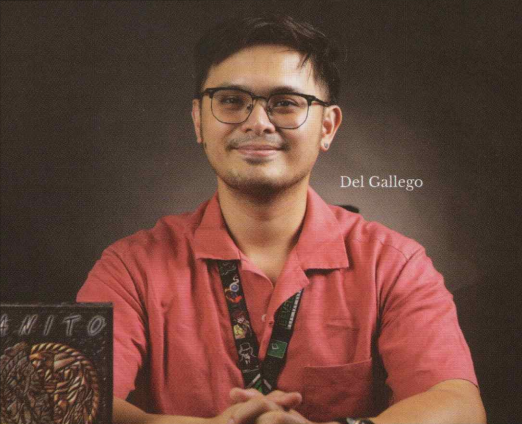
Dr. Neil Patrick Del Gallego, Lab Head of the Graphics, Animation, Multimedia and Entertainment Laboratory (GAME Lab) at the Advanced Research and Innovation Center (AdRIC), is leading an initiative that seeks to strengthen the Philippines’ game development capabilities through the creation of a homegrown game engine.
Dr. Del Gallego was recently featured in DLSU Questions Magazine for his work on Project Anito, a DOST-Philippine Council for Industry, Energy, and Emerging Technology Research and Development (DOST-PCIEERD)-funded project that aims to develop an in-house game engine for Filipino developers, start-ups, and independent game studios.
Building a Game Engine for the Local Industry
A game engine provides developers with the essential tools and technologies needed to create digital games. While internationally established platforms such as Unity and Unreal Engine are widely used, Dr. Del Gallego sees an opportunity to develop technology that is more accessible and responsive to the needs of the local game development community.
Drawing from his experience as a former game developer, Dr. Del Gallego began pursuing the development of Project Anito in 2024 after completing his PhD and contributing to efforts to develop a roadmap for the Philippine creative industry.
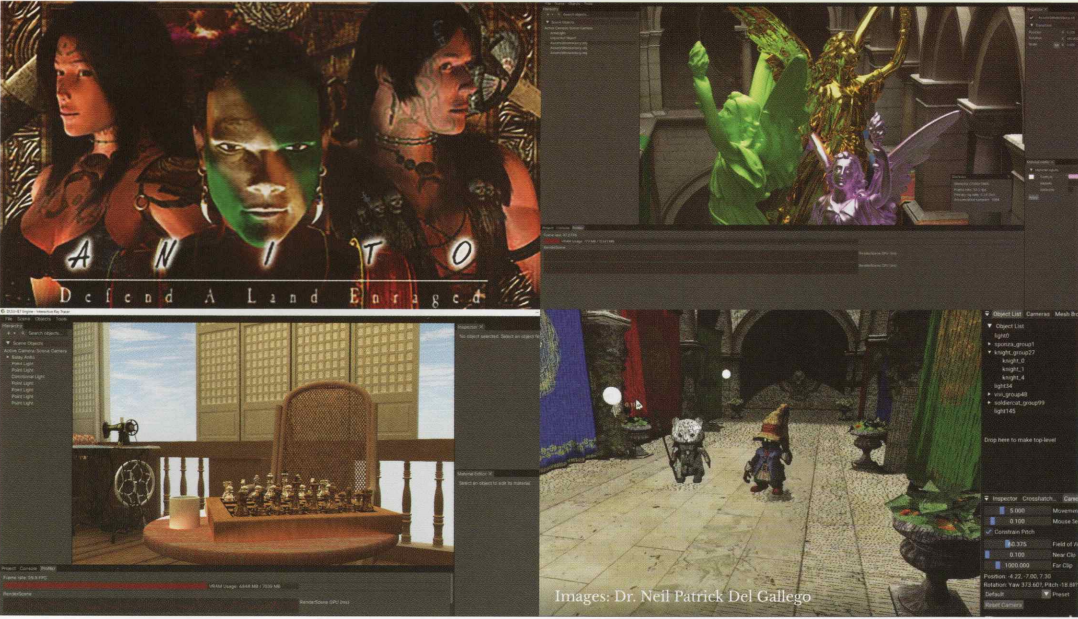
The project takes its name from Anito, recognized as the first Filipino game released commercially in 2003. Notably, some of the original creators of the game are also part of the current DOST-funded initiative.
Project Anito is designed with accessibility in mind, particularly for aspiring developers and smaller studios that may find existing game engines difficult to navigate. By developing local game engineering capabilities, the project seeks to provide Filipino creators with additional tools while contributing to the long-term growth and sustainability of the country’s game development sector.
Beyond Games: Technology for Scientific Visualization
One of Project Anito’s key developments is Anito Plume, a component that explores the use of game engine technology for scientific visualization.
Rather than being limited to entertainment, the technology can be used to represent complex scientific phenomena through visual simulations. The research team, for instance, demonstrated the simulation of volcanic eruption plumes using real-world data and produced visually accurate representations of the 2020 Taal Volcano eruption.
Such applications demonstrate how technologies developed for games can extend into other fields. Scientific visualization can help researchers, educators, and communicators present complex information in ways that are easier for audiences to understand. It may also contribute to communicating disaster-related information and increasing public awareness of hazards.
Exploring More Accessible Ray Tracing Technology
Project Anito also explores ray tracing, a technology used to produce realistic lighting and visual effects by simulating how light interacts with objects.
The team is working toward making this technology more accessible to users who may not have extensive technical expertise. Its potential applications extend beyond game development, including animation, cinematics, film, and other forms of digital media where realistic lighting and visual presentation are important.
Through these developments, Project Anito demonstrates how game engineering can serve as a foundation for technologies with applications beyond traditional game production.
Strengthening Filipino Game Development
Project Anito brings together collaborators from different fields and sectors. At De La Salle University, Dr. Del Gallego works alongside Dr. Kervin Kalabias, Dr. Jordan Deha, Dr. Robin Sebolino, and Dr. Katrina Alvarez, whose expertise spans software technology, literature, and communication.
The project is further supported by industry partners Cybercraft Philippines, Megacat Studios, VISON Tech Inc., and ArtMikers Studio, which contribute technical expertise and industry perspectives. Filipino game development pioneers Luna Javier and Miker Rivero also provide expertise in game design and art.
This collaborative approach reflects the multidisciplinary nature of game development and the importance of connecting academic research with industry experience.
Supporting the Future of Filipino Creators
Through Project Anito, Dr. Del Gallego and his collaborators are working toward more than the development of a new game engine. Their efforts contribute to a broader goal of strengthening the Philippines’ capacity in game engineering, creative technology, and software development.
The project also highlights the potential of Filipino researchers and developers to create technologies that respond to local needs while opening opportunities for participation in the global game development industry.
As the Philippine game development community continues to grow, initiatives such as Project Anito provide a platform for developing homegrown technology and supporting the next generation of Filipino creators.
Congratulations to Dr. Neil Patrick Del Gallego on this well-deserved feature in DLSU Questions Magazine! AdRIC is proud to see its researchers contributing to the advancement of local technology and the growth of the Philippine creative industry.
This article is based on the feature published in DLSU Questions Magazine.